Iranian Strategy Built on Lessons of US Wars, Faith and Homegrown Tech
© Sputnik
Subscribe
Iran has learned from decades of US wars in the Middle East and beyond and has been preparing for war for at least 25 years, Iranian-American international affairs analyst Mohammad Marandi tells Sputnik.
US Wars in Middle East and North Africa
Iraq War, spring 2003:
Rationale: Toppling Saddam Hussein in Iraq under the pretext of non-existent weapons of mass destruction
Key Events: The US invaded Iraq on March 20; Baghdad fell in April; president George Bush declared "mission accomplished" on the carrier USS Abraham Lincoln on May 1
Aftermath: The initial victory gave way to a guerilla war, years of occupation, terrorist attacks and eventual US withdrawal
Libya War, spring 2011
Rationale: Toppling Muammar Gaddafi under the pretext of protecting civilians under UN Security Council Resolution 1973
Key Events: NATO, led by the US, intervened in Libya; US-backed rebels seized Tripoli in August and killed Gaddafi in October
Aftermath: Victory without a postwar plan left a power vacuum, civil war, the 2012 Benghazi killing of the US ambassador, a refugee crisis in Europe and Libya’s slide into anarchy
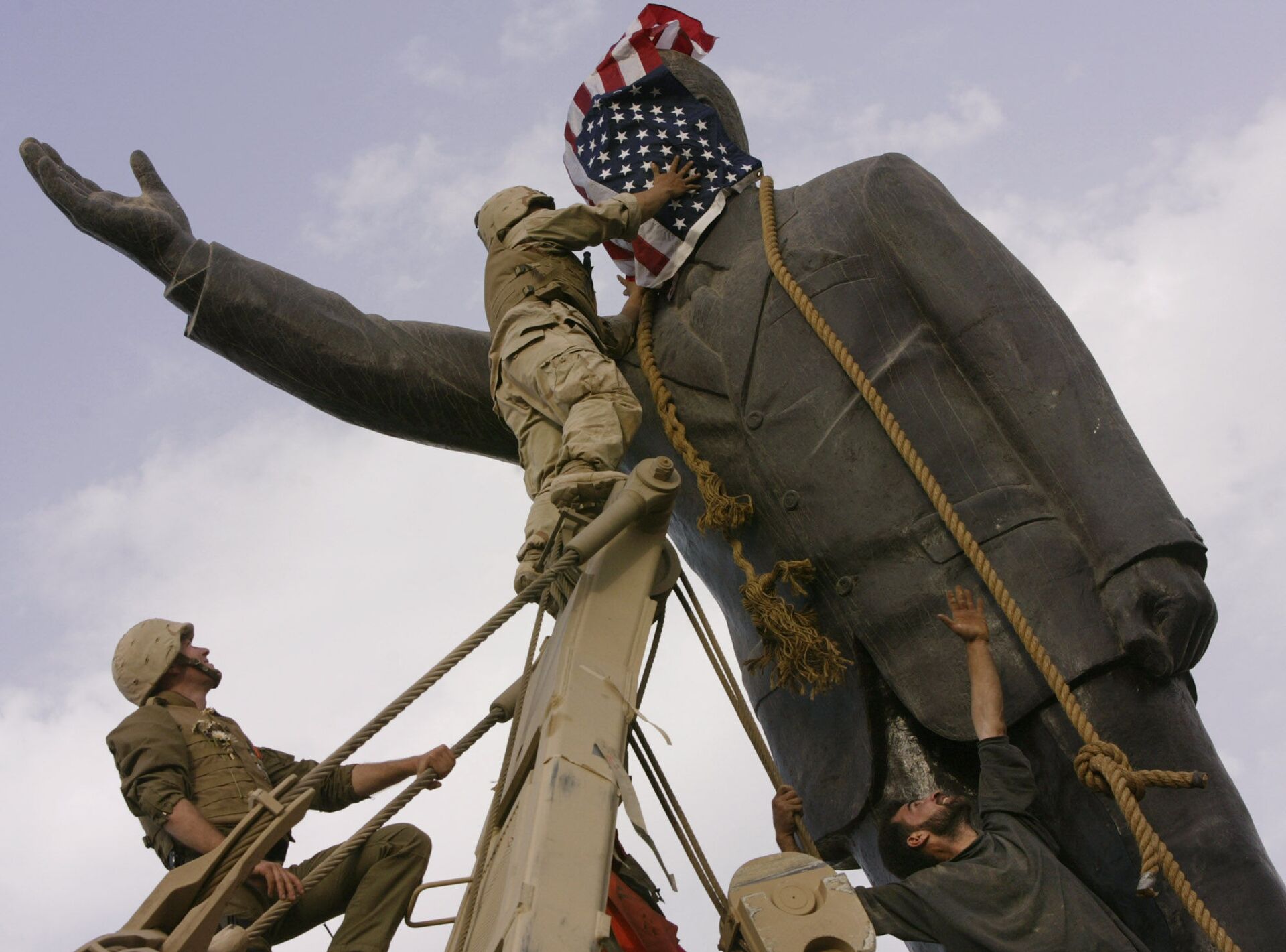
In this file photo taken Wednesday, April 9, 2003, an Iraqi man, bottom right, watches Cpl. Edward Chin of the 3rd Battalion, 4th Marines Regiment, cover the face of a statue of Saddam Hussein with an American flag before toppling the statue in downtown in Baghdad, Iraq.
© AP Photo / Jerome Delay
What Lessons Did Iran Learn?
Since the Islamic Revolution of 1979, Iranians have suffered enmity from the US, its allies and client regimes, says Marandi.
The US has imposed sanctions against Iran for nearly 47 years and has supported anti-Iranian factions.
"Iran began a project for its defense," the pundit notes. "It developed indigenous technology. It focused on building drones and missiles and creating underground bases to protect its drones and missiles."
Iran’s own experience, and the painful lessons of others, have shaped its strategy
That is reinforced by its identity as a civilization-state with thousands of years of heritage
Religious ideology and tradition drive resistance to aggressors
"I think all of these together have created an environment in which resistance in Iran becomes far more effective. And that is why this Epstein coalition has failed," Marandi highlights.