https://sputnikglobe.com/20260318/china-launches-8-satellites-as-commercial-space-push-accelerates-1123848825.html
China Launches 8 Satellites as Commercial Space Push Accelerates
China Launches 8 Satellites as Commercial Space Push Accelerates
Sputnik International
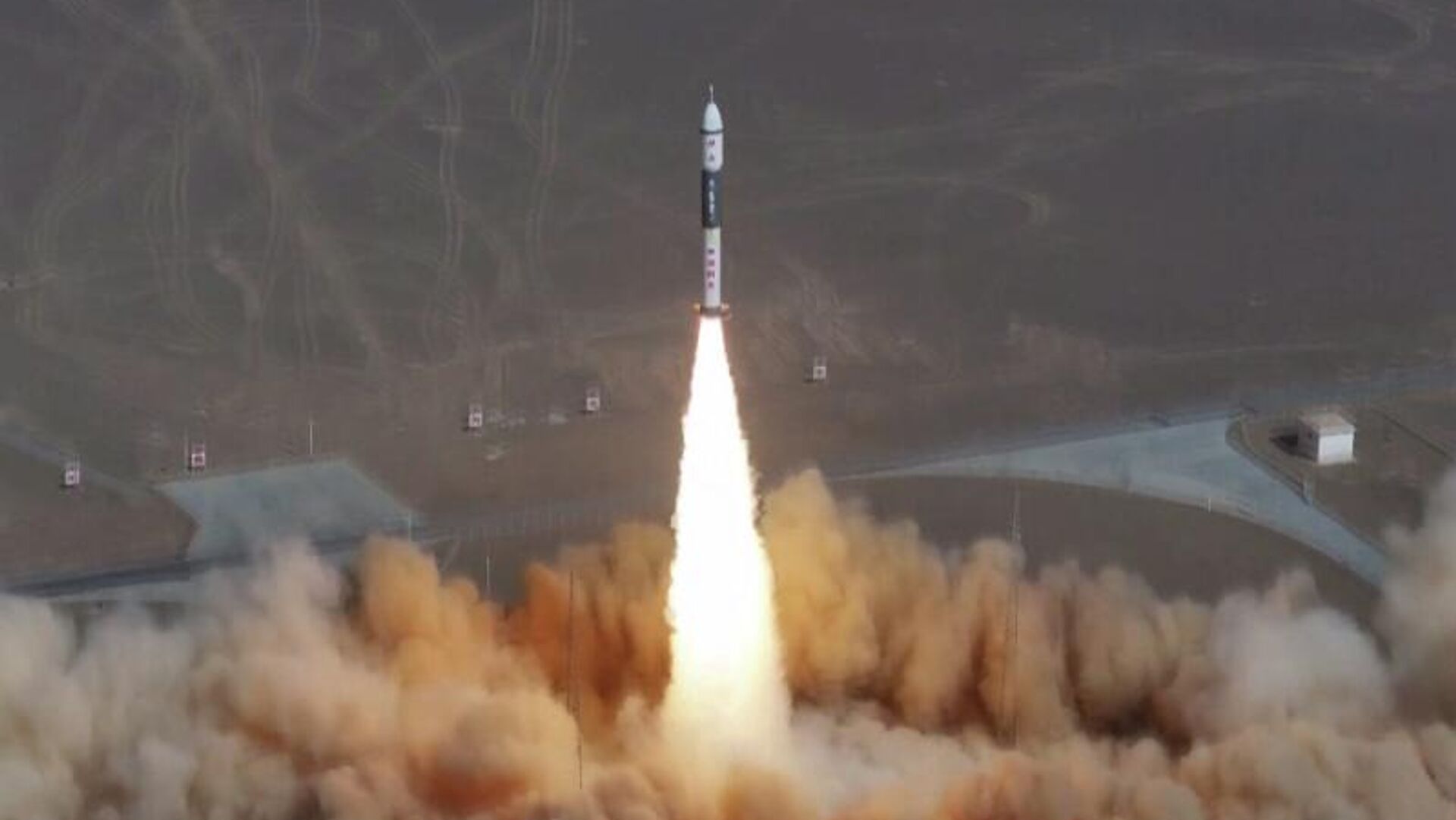
China on Monday launched the Kuaizhou-11 Y7 carrier rocket from the Jiuquan Satellite Launch Center in Northwest China's Gansu Province, sending eight new satellites into preset orbits, the Xinhua News Agency reported.
2026-03-18T16:16+0000
2026-03-18T16:16+0000
2026-03-18T19:16+0000
beyond politics
china
beijing
china aerospace science and industry corporation limited (casic)
https://cdn1.img.sputnikglobe.com/img/07ea/03/12/1123848669_0:15:800:465_1920x0_80_0_0_517529e8f8f1beb821308751b7e277f8.jpg
The mission marked the fifth flight of the Kuaizhou-11 rocket. The "Kuaizhou" series of small solid-propellant launch vehicles was developed by the China Aerospace Science and Industry Corp (CASIC) and represents China's first small solid rocket capable of rapid integration and rapid orbital insertion, setting the country's fastest record for launch preparation.Wang Peng, an associate research fellow at the Beijing Academy of Social Sciences, told the Global Times on Monday that satellite internet is shifting from an experimental space infrastructure toward a foundational platform for consumer-grade markets. The Kuaizhou-11 has a payload capacity of about one ton to a 700-kilometer sun-synchronous orbit and features a 2.65-meter fairing diameter. With a short preparation cycle and relatively low launch costs, the rocket is designed to support a wide range of commercial launch missions, according to the CASIC.The Kuaizhou series has also helped establish China's rapid space response capability. In the event of natural disasters or failures in ground monitoring and communications systems, satellites can be launched and deployed quickly to obtain disaster data and support emergency response efforts, the CASIC said.Among the items in the payload on Monday's mission was the Juntian-1 04A satellite, developed independently by commercial aerospace company Beijing JTSPACE Technology Co. According to reports from the Beijing Daily, the satellite can independently acquire millimeter-level surface deformation data, providing key technical support for geological disaster early warning and safety monitoring of large-scale ground infrastructure. Another part of the payload was a computing base station satellite developed by a chip brand under Chinese home-appliance maker Dreame, which was launched aboard the rocket to test the system's performance limits in the space environment. The company previously announced plans to build a space-based supercomputing center and deploy as many as 2 million computing satellites, Chinese media outlet jiemian.com reported. Wang noted that the emerging model of "national-team" rockets and private-sector satellites is optimizing the division of labor and resource allocation across the industry.This complementary structure is creating a steady yet forward-looking synergy, accelerating the development of a globally competitive commercial space ecosystem in China, Wang said. The rapidly expanding industrial base reflects this momentum. According to a report by Xinhua, China now has more than 600 commercial aerospace enterprises spanning the entire industrial chain - from upstream rocket and satellite manufacturing and supporting equipment, to midstream launch services, ground infrastructure and satellite operations, and downstream terminal applications and service markets.China's commercial space sector maintained rapid growth in 2025. The country conducted 50 commercial launch missions during the year, accounting for 54 percent of all launches nationwide. A total of 311 commercial satellites were placed into orbit, representing 84 percent of China's total satellites launched that year, official data showed.This article originally appeared on the Global Times website.
china
beijing
Sputnik International
feedback@sputniknews.com
+74956456601
MIA „Rossiya Segodnya“
2026
Sputnik International
feedback@sputniknews.com
+74956456601
MIA „Rossiya Segodnya“
News
en_EN
Sputnik International
feedback@sputniknews.com
+74956456601
MIA „Rossiya Segodnya“
Sputnik International
feedback@sputniknews.com
+74956456601
MIA „Rossiya Segodnya“
china space launch 2026, kuaizhou-11 rocket, jiuquan satellite launch center, chinese satellites launch, casic china aerospace, satellite internet china, commercial space industry china, rapid launch capability china, beijing jtspace satellite, juntian-1 satellite, space-based computing satellites, china space technology, low cost rocket launch china, sun-synchronous orbit satellites, china commercial aerospace growth, satellite deployment china, emergency response satellites, chinese private space companies, space industry trends 2026, china satellite network expansion
china space launch 2026, kuaizhou-11 rocket, jiuquan satellite launch center, chinese satellites launch, casic china aerospace, satellite internet china, commercial space industry china, rapid launch capability china, beijing jtspace satellite, juntian-1 satellite, space-based computing satellites, china space technology, low cost rocket launch china, sun-synchronous orbit satellites, china commercial aerospace growth, satellite deployment china, emergency response satellites, chinese private space companies, space industry trends 2026, china satellite network expansion
China Launches 8 Satellites as Commercial Space Push Accelerates
16:16 GMT 18.03.2026 (Updated: 19:16 GMT 18.03.2026) China on Monday launched the Kuaizhou-11 Y7 carrier rocket from the Jiuquan Satellite Launch Center in Northwest China's Gansu Province, sending eight new satellites into preset orbits, the Xinhua News Agency reported.
The mission marked the fifth flight of the Kuaizhou-11 rocket. The "Kuaizhou" series of small solid-propellant launch vehicles was developed by the China Aerospace Science and Industry Corp (CASIC) and represents China's first small solid rocket capable of rapid integration and rapid orbital insertion, setting the country's fastest record for launch preparation.
Wang Peng, an associate research fellow at the Beijing Academy of Social Sciences, told the Global Times on Monday that satellite internet is shifting from an experimental space infrastructure toward a foundational platform for consumer-grade markets.
"Against this backdrop, heavier payload capability, lower launch costs and higher launch frequency are expected to emerge as defining trends for China's commercial space sector in 2026," Wang said.
The Kuaizhou-11 has a payload capacity of about one ton to a 700-kilometer sun-synchronous orbit and features a 2.65-meter fairing diameter. With a short preparation cycle and relatively low launch costs, the rocket is designed to support a wide range of commercial launch missions, according to the CASIC.
The Kuaizhou series has also helped establish China's rapid space response capability. In the event of natural disasters or failures in ground monitoring and communications systems, satellites can be launched and deployed quickly to obtain disaster data and support emergency response efforts, the CASIC said.
Among the items in the payload on Monday's mission was the Juntian-1 04A satellite, developed independently by commercial aerospace company Beijing JTSPACE Technology Co. According to reports from the Beijing Daily, the satellite can independently acquire millimeter-level surface deformation data, providing key technical support for geological disaster early warning and safety monitoring of large-scale ground infrastructure.
Another part of the payload was a computing base station satellite developed by a chip brand under Chinese home-appliance maker Dreame, which was launched aboard the rocket to test the system's performance limits in the space environment. The company previously announced plans to build a space-based supercomputing center and deploy as many as 2 million computing satellites, Chinese media outlet jiemian.com reported.
Wang noted that the emerging model of "national-team" rockets and private-sector satellites is optimizing the division of labor and resource allocation across the industry.
"Space launch remains highly technical and risky. Using the mature launch platforms and infrastructure of state-owned aerospace firms provides emerging satellite companies with more reliable orbital access and lowers entry risks, while private firms bring stronger market responsiveness and faster iteration in satellite manufacturing and downstream applications," said Wang.
This complementary structure is creating a steady yet forward-looking synergy, accelerating the development of a globally competitive commercial space ecosystem in China, Wang said.
The rapidly expanding industrial base reflects this momentum. According to a report by Xinhua, China now has more than 600 commercial aerospace enterprises spanning the entire industrial chain - from upstream rocket and satellite manufacturing and supporting equipment, to midstream launch services, ground infrastructure and satellite operations, and downstream terminal applications and service markets.
China's commercial space sector maintained rapid growth in 2025. The country conducted 50 commercial launch missions during the year, accounting for 54 percent of all launches nationwide. A total of 311 commercial satellites were placed into orbit, representing 84 percent of China's total satellites launched that year, official data showed.
This article originally appeared on the Global Times website.